

Fantasyland changes the perspective
Set in a fairytale universe, the house feels closer to a Gothic legend than a Southern estate or civic building.
Tokyo Disneyland
Opened on April 15, 1983, with Tokyo Disneyland, the Haunted Mansion features the major scenes of the American model, but the Fantasyland environment and the resort's quality of execution significantly alter its perception.
Tokyo Disneyland
At Tokyo Disneyland, the Haunted Mansion keeps its American DNA mostly intact, but its placement in Fantasyland and its Holiday Nightmare overlay give it a surprisingly unique personality.
The Haunted Mansion at Tokyo Disneyland is a curious and very successful case: it remains close to the American formula, but its simple move to Fantasyland is enough to change the overall feel. The mansion seems less Southern, less civic, and closer to a Gothic tale.
Tokyo then adds its own seasonal tradition with Haunted Mansion Holiday Nightmare, which further reinforces the idea that this version lives in its own way, even without a major script rewrite like in Paris.
What makes Tokyo interesting
Tokyo proves that a change of context, maintenance, and visiting culture can be enough to create a distinct impression without profoundly modifying the track.
Set in a fairytale universe, the house feels closer to a Gothic legend than a Southern estate or civic building.
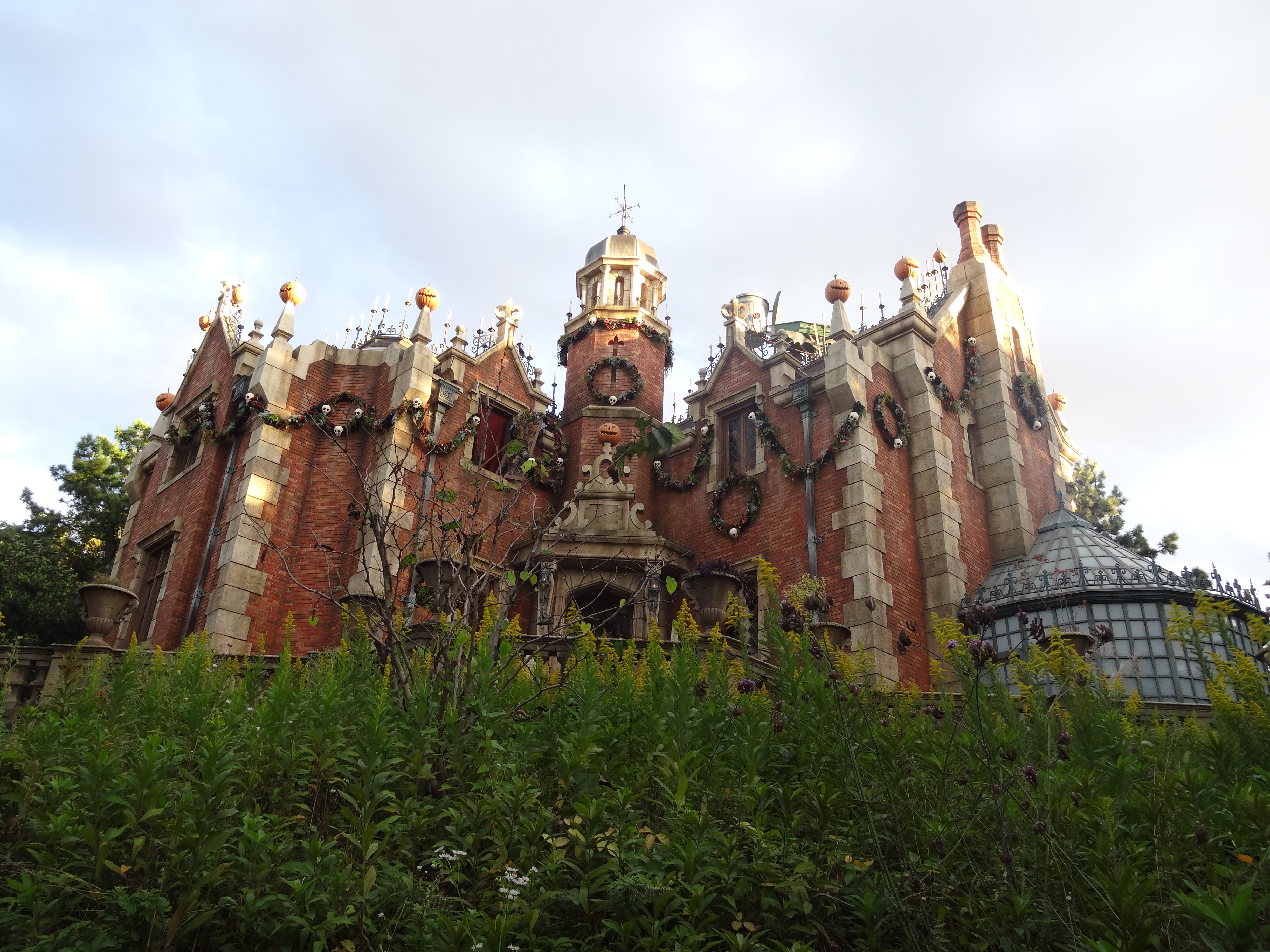
The seasonal overlay is now part of the Tokyo version's identity for a large portion of the regular public.

Maintenance, clarity, and a premium finish feel enhance the value of an attraction that is conceptually very well known.
Reading the Tokyo version
The Ghost Host, portraits, Madame Leota, the ballroom, and the Hitchhiking Ghosts are all still there. Yet, the overall impression differs because Fantasyland transforms the house into a Gothic relative of the park's castle and dark fairytales.
Tokyo doesn't need a major new storyline to exist. The execution, maintenance, and seasonality are enough to give the ride a more refined, almost more elegant tone than some American versions.

To remember
Dark ride / Omnimover
Classic Mansion formula, very recognizable for those who know the US versions
Seasonal
Closures and returns of Holiday Nightmare set the rhythm for the attraction
Very accessible
An ideal entry point into Tokyo Disneyland classics
POV Ride-through
The video highlights how Tokyo knows how to dress a well-known base with a consistent and extremely clean seasonal layer in terms of execution.
Facade & Overlay
The Japanese version benefits greatly from being viewed as a series: the facade, then the overlay, then the repeated details show what Tokyo truly brings.
This simple placement is enough to change the mental reading of the ride. It becomes more of a Gothic tale than a Southern home.

Tokyo picks up an architectural vocabulary very close to Florida, but makes it cleaner and more contained within the park's landscape.
Holiday Nightmare is not just a visual gimmick. It completely reshuffles the atmosphere perceived by regular visitors.

Tokyo demonstrates its obsession with finish here: the overlay feels integrated, not just slapped on.

The main strength of Tokyo lies in this shift of mood without changing the deep structure.

Over the years, the overlay has become a component of the Japanese version's reputation, not just a temporary change.
Analytical Summary
The value of Tokyo Disneyland doesn't come from a radical departure. It comes from the proof that a great attraction can change personality through context, the land, maintenance, and seasonal use.
For a comparative visitor, it's a fascinating version precisely because it shows the minimum change necessary to produce a different feeling.
Land
Fantasyland
The most unique context in the classic family.
Season
Holiday Nightmare
A tradition that leaves a strong mark on the memory of the ride.
Style
Premium Execution
Tokyo sells precision more than disruption.
Consolidated Technical Sheet
Tokyo remains one of the least rewritten versions in terms of storyline, making its placement context even more important in the overall experience.
The periods of installation and removal of the seasonal overlay strongly dictate the availability of the classic version.
Key Chronology
Opening with Tokyo Disneyland
The Haunted Mansion is one of the major founding classics of the Japanese park.
Debut of Holiday Nightmare
Tokyo in turn adopts the seasonal overlay inspired by The Nightmare Before Christmas.
New overlay photos
The Holiday Nightmare version continues to fuel the attraction's contemporary public image.
Mythology
Placing the Mansion in Fantasyland acts almost like an imaginary footnote: Disney's ghosts no longer come just from American macabre folklore, but from a territory neighboring fairy tales and spells.
This subtle shift explains why the Tokyo version sometimes seems softer, more elegant, even more acceptable to a very broad audience, without losing the original macabre pleasure.
Details to watch for
The Land
FantasylandThe simple fact of approaching the mansion after fairytale architectures profoundly changes its emotional reception.
Holiday Nightmare
SeasonalObserving how the overlay wraps around the building helps understand the flexibility of the original design.
Florida Kinship
FacadeThe general silhouette is more reminiscent of Magic Kingdom than Anaheim, despite the very different context.
Pepper's Ghost
BallroomAs elsewhere, the old effect remains one of the series' best arguments against the all-screen approach.
Incidents and Safety
General History
The Haunted Mansion at Tokyo Disneyland operates at very low speed on an Omnimover system, similar to the American versions. No serious incidents have been publicly documented since its opening in 1983.
OLC (Oriental Land Company) does not communicate specific incident data by attraction. The resort's quality of maintenance and strict control procedures are regularly cited as exemplary in the industry.
Continuous Maintenance
The closure periods for the installation and removal of the Holiday Nightmare overlay also allow for thorough preventive maintenance of the mechanical systems and special effects.
This regular maintenance pace contributes to keeping the attraction in a very reliable operating state for over forty years.
Global Comparison
| Version | Opening | Manufacturer | Length | Facade | Vehicle | Duration | What sets it apart |
|---|---|---|---|---|---|---|---|
| Disneyland California | 1969 | Arrow | n/a | approx. 54 ft | Omnimover | approx. 7 min | The original: real elevator stretching room, founding macabre humor. |
| Magic Kingdom | 1971 | Arrow | n/a | more imposing | Omnimover | approx. 7 min | Major Gothic facade, 2011 interactive queue, Liberty Square. |
| Tokyo Disneyland | 1983 | Arrow | n/a | n/a | Omnimover | approx. 7 min | Only version in Fantasyland, Holiday Nightmare overlay since 2004. |
| Disneyland Paris | 1992 | Vekoma | 239 m | n/a | Omnimover | 6 min | Phantom Manor: Ravenswood tragic backstory, Thunder Mesa narrative. |
| Hong Kong Disneyland | 2013 | WDI | trackless | n/a | Trackless | 5 min 30 | Mystic Manor: no ghosts, animated objects, exploration universe. |
Continue reading
In Tokyo, the Haunted Mansion sits alongside the castles, tales, and magical worlds of Fantasyland. This proximity subtly changes its emotional reception and distinguishes the Japanese version from all others.
See Fantasyland Sources & Leads
Editorial Limits
Precise technical data on the Tokyo track are not officially communicated by OLC.
This sheet prioritizes the most solid contextual, scenographic, and comparative elements.
